Wood or Vinyl Privacy Fence
DaleTree offers wood and vinyl fence installation for your families home privacy or pet needs. If you would like a quote, please reach out to us for a free estimate or call us at 605-549-1188.
Additionally, here is a general overview of things to consider when looking to install a privacy fence.
In the Sioux Falls Metro, fences can range from 4 to 6 feet tall, but in most cases, you're can't go any taller than that. They're a great solution to provide your family with a privacy screen option for your backyard (in some cases, just your pool and patio privacy), and they can often act a decorative or children protective barrier option for your front yard.
Wood Privacy Fences
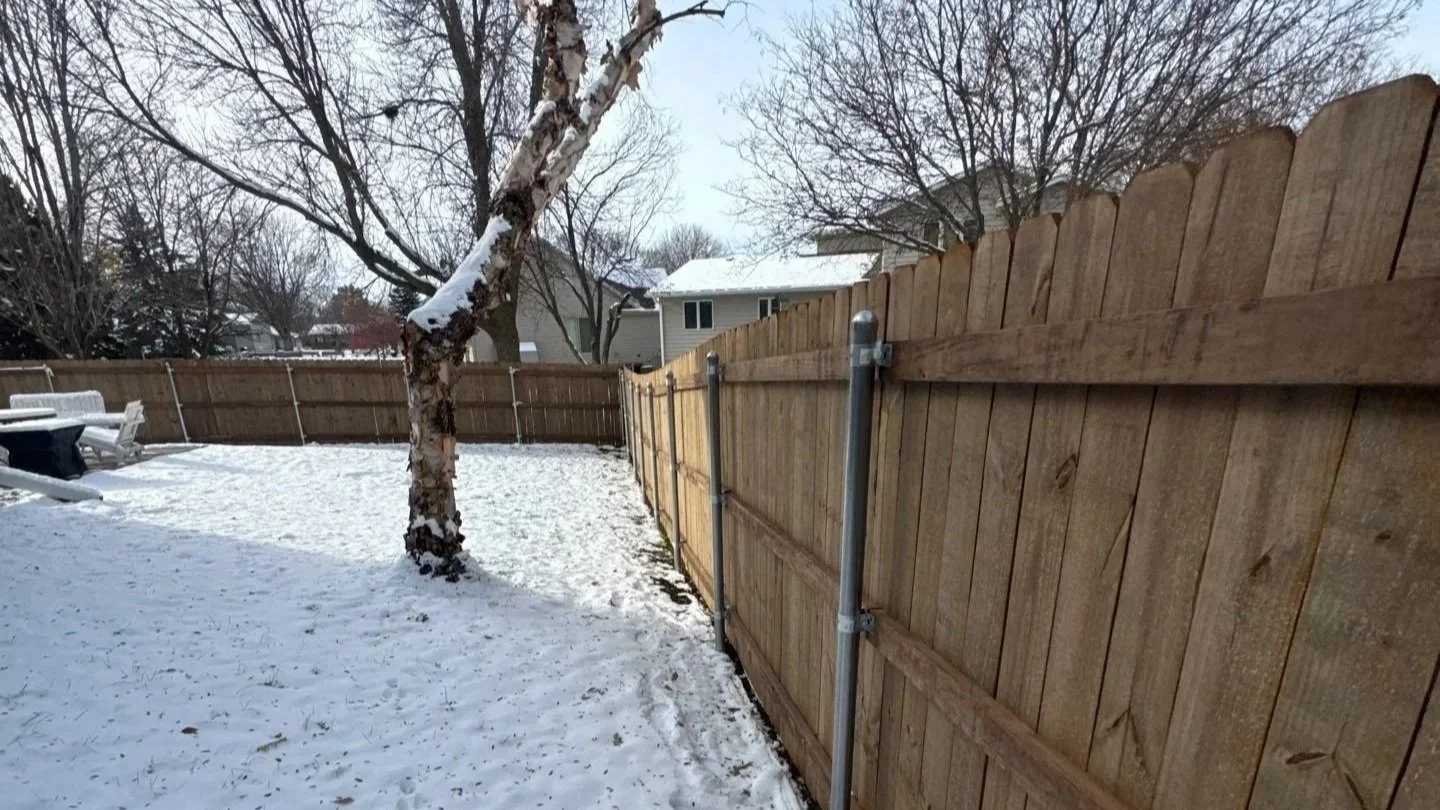
Often when we think of privacy fences, a series of wood fence panels comes to mind. They're cost effective, can often last well past 10 years, and solve your needs for having a fence in the first place. However, there are some definite pros and cons to having a privacy fence made from wood. Here are some things for you to consider:
Wood Fence Pros:
Wood panel fences are relatively affordable compared to materials like vinyl or composite, with costs usually ranging from $15-$35 per linear foot installed (depending on the kind of wood you use and a few other options).
You get a lot of customization options too! There are a ton of privacy fence ideas on the internet, and often include different wood types (cedar, treated pine, treated cedartone pine, etc), stain colors, and styles like board-on-board or shadowbox. Wood has a natural, warm aesthetic that many people prefer, and installation is fairly straightforward. Repair is also much easier for the home owner to diy since you can replace individual boards without redoing the entire fence.
Wood Fence Cons:
The biggest downside is maintenance - wood often requires regular attention, every couple of years in the form of staining or sealing, with treated wood probably needing a little less maintenance. Doing so will help you to prolong prevent rot, warping, and weather damage. Even with regular maintenance and care, wood fences typically last 15-20 years, which is shorter than vinyl or metal alternatives. They're susceptible to termites, carpenter ants, wood rot, wind and winter damage.
Vinyl Privacy Fences
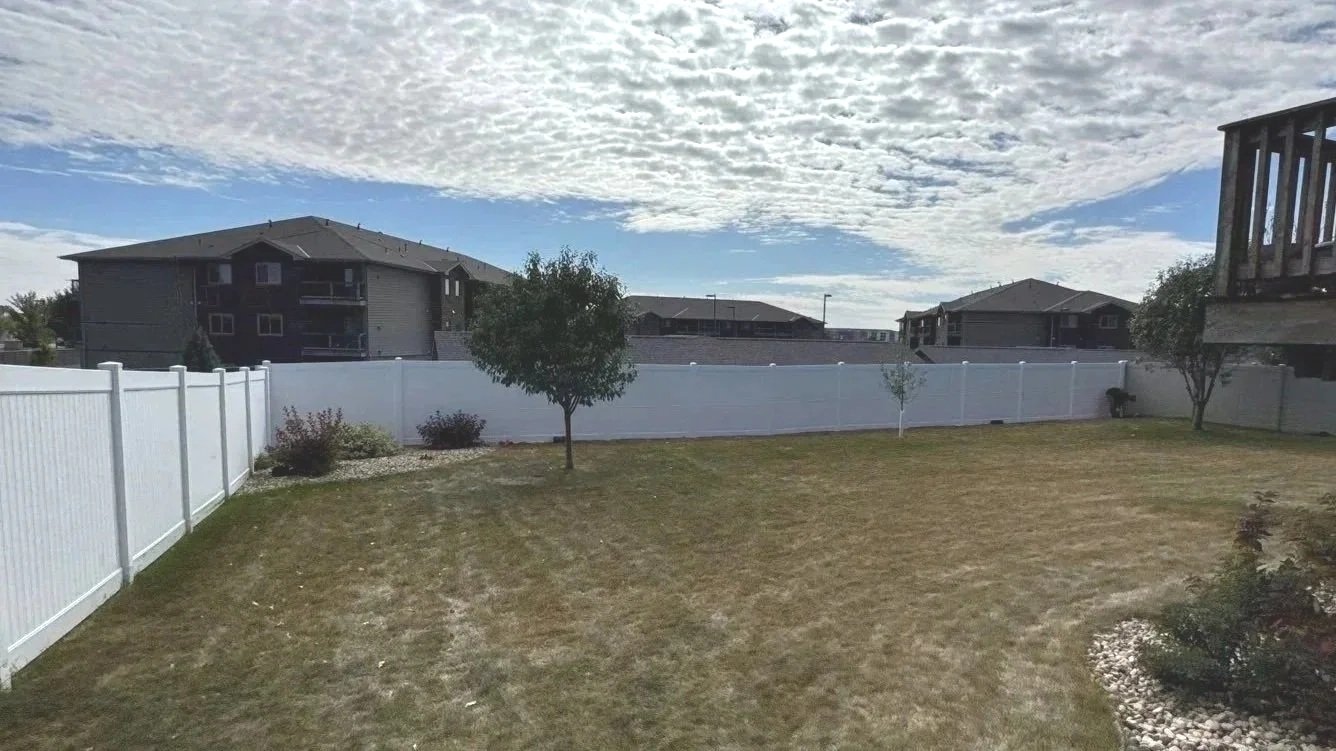
Where wood fences fall short, vinyl fences often shine. However, they too have their own series of pros and cons you should consider.
Vinyl Fence Pros:
Vinyl is extremely low-maintenance - no painting, staining, or sealing required, just occasional hosing it down with your garden hose (and maybe washing with soap and water if it's really bad). It's highly durable and resistant to rot, insects, and moisture, which makes it ideal for areas with snow and ice. Most quality vinyl fences come with 20-30 year warranties and can last 30+ years, significantly longer than wood. Vinyl doesn't warp, splinter, or crack from normal wear, and it maintains its color without fading as much as painted wood would. While the upfront cost is higher (typically $20-$45 per linear foot), you save time and money long-term since there are virtually no ongoing maintenance costs.
Vinyl Fence Cons:
The biggest concern in colder climates is that vinyl becomes more brittle in freezing temperatures and can crack if impacted - so if something hits the fence during winter (fallen branch, snow removal equipment, etc.), it's more likely to break than wood would be. Vinyl also expands and contracts significantly with temperature changes, which means it needs proper installation with room for movement, or panels can buckle. If a section does crack or break, you typically need to replace entire panels rather than individual boards, which can be more expensive and may not match perfectly if your fence has faded over time. The initial cost is notably higher than wood, and some people find vinyl has a more artificial (or plastic) appearance compared to natural wood. The designs have gotten better with the different colors, but white still very much falls into the plastic looking category.